The Red Temple, Koh Samui: A Local's Guide to Wat Sila Ngu
The Red Temple, Koh Samui: why Wat Sila Ngu is painted that colour, what the snake carvings actually mean, and how to find it above Hua Thanon Beach.
May · September 25, 2026
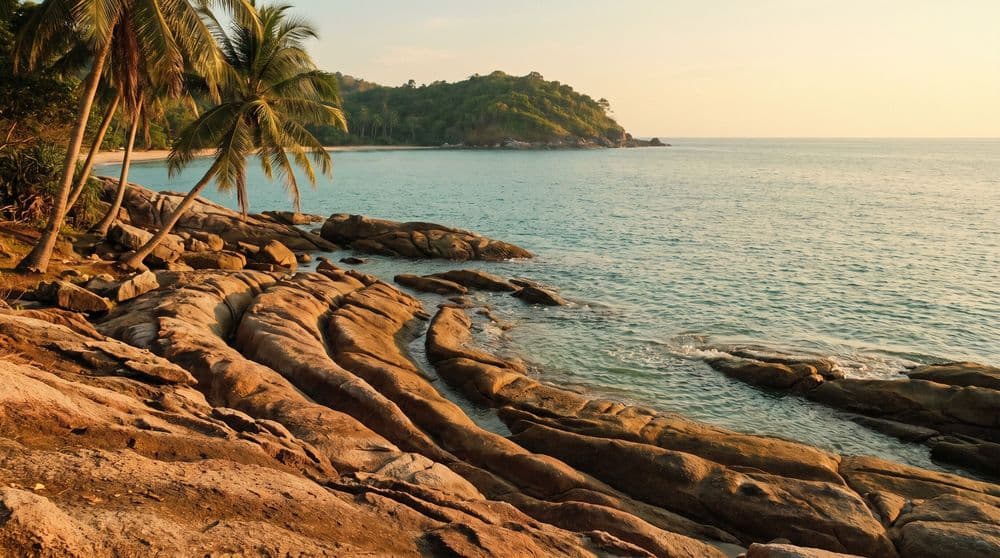
The Red Temple, Koh Samui's most photographed temple that almost nobody has written an actual guide to, has three names and one location. Wat Sila Ngu. Wat Ratchathammaram. The Red Temple. Same building, same hill above Hua Thanon Beach, just three different things people call it depending on which tour driver they asked. Our own temples guide gives it a paragraph in a roundup. This is the part that roundup didn't have room for.
Why it's called the Red Temple, and why it's called Stone Snake
"Sila" means stone. "Ngu" means snake. Put them together and you get Wat Sila Ngu, which the temple's own social posts describe as painted red by mixing limestone with cement rather than using a standard paint job, a detail that explains why the colour reads more like terracotta than a fresh coat. Locals also call it the Snake Stone temple, and not as a cute nickname invented for tourists: the rock along that stretch of shoreline naturally forms in long ridged patterns that look like coiled serpents. The naga, the mythical serpent that guards Buddhist temples across Thailand, shows up again and again in the carving, the stair rails, the roofline. Between the rock underneath and the mythology on top, the whole site is snake, twice over.
What's actually there
It's small. You can walk the whole complex in five or ten minutes if you're not looking closely, which would be a waste, because the closer look is the entire point. The centrepiece is a golden Buddha statue in the Subduing Mara pose, the one with the hand reaching down to touch the earth. Off to the side is a shrine to Guan Yin, the Chinese Buddhist goddess of mercy, which tells you this coast has had more than one culture's fishing boats pull up to it over the centuries. The walls and stairways carry the red-and-gold carving work in enough detail that you'll find yourself walking slower than you planned to, tracing patterns instead of taking the one photo and leaving.
Finding it
The Red Temple sits on the hill directly above Hua Thanon Beach, on the island's quieter southeast corner, reachable by stairs up from the beach itself or by road if you're coming by scooter, taxi, Grab, or a songthaew that's willing to make the detour. It's not on the main tourist loop with Big Buddha and Wat Plai Laem up north, which is exactly why most visitors here are local rather than a coach load off a day-tour itinerary.
Hours, entry, and dress code
Treat it as a daylight stop rather than pinning it to an exact hour. Sources on this one genuinely disagree, some putting the gate open from early morning to early evening, others describing it as an open coastal site with no strict closing time. Either way, don't show up after dark expecting the carvings to mean anything under a phone torch; you want the sun on the red stone, not a flashlight. There's no formal entry fee, only a donation box, same as every working temple we've covered on this island. Dress code is the standard Thai temple rule and it is not optional: shoulders and knees covered, shoes off before you step into any building with a Buddha image inside.
Is it worth the stop?
Yes, and specifically because it isn't Big Buddha. That one's worth doing once for the scale of it. This one's worth doing because it's quiet, it's five minutes to see and twenty to actually look at, and it sits right above a beach that's still a working Muslim fishing village rather than a resort strip. Pair the two: temple on the hill, Hua Thanon below it, and you've got a morning that isn't trying to sell you anything. If you're staying with us in Chaweng Noi, it's a genuine detour south rather than a stop on the way to somewhere else, so build it into a day that's already headed toward Lamai or Hua Thanon rather than a special trip on its own.
Quick answers
Is the Red Temple the same as Wat Sila Ngu?
Yes. Wat Sila Ngu, Wat Ratchathammaram, and the Red Temple are three names for one temple above Hua Thanon Beach, not three separate places.
Is there an entry fee for the Red Temple?
No formal fee. There's a donation box, the same setup as most working temples on the island.
What are the opening hours?
Sources disagree on the exact hours, so treat it as a daylight visit rather than banking on a specific opening or closing time. Go for the light on the red stone, not after dark.
What's the dress code at the Red Temple?
Cover your shoulders and knees, and take your shoes off before entering any building with a Buddha statue inside. This is a working temple, not a photo set.
How do I get to the Red Temple from Hua Thanon Beach?
There are stairs straight up from the beach. Otherwise it's reachable by scooter, taxi, Grab, or a songthaew willing to detour off the main road.
The Villa
Come stay above the bay.
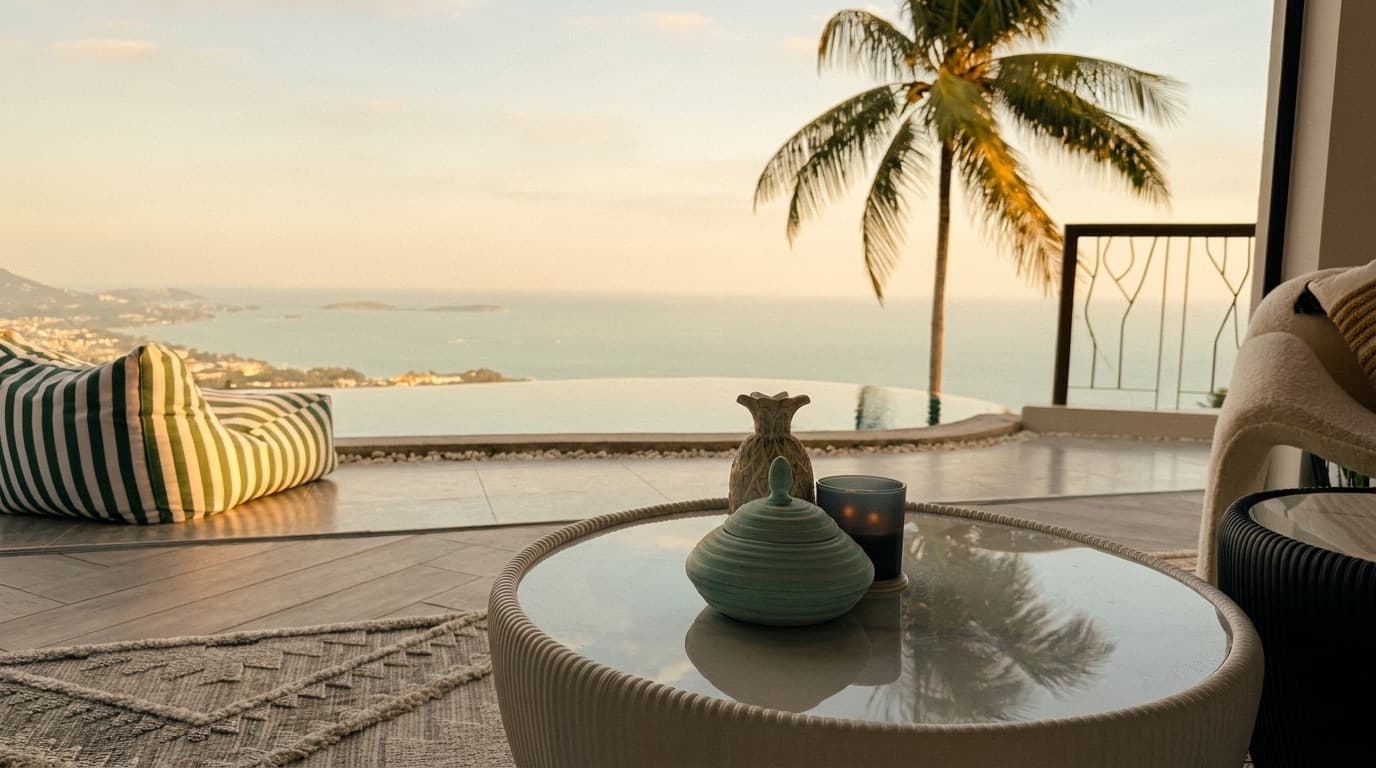
Sabai Sabai is a three-bedroom villa on the cliffs above Chaweng Noi, with an infinity pool and the whole Gulf of Thailand below.
See the villa →Written by
May
Living in the sunshine