Nathon, Koh Samui: Is the Island's Old Town Actually Worth the Trip?
Nathon, Koh Samui is the one part of the island that isn't performing for tourists. Here's what it actually is, when to go, and whether it's worth the drive.
May · August 19, 2026
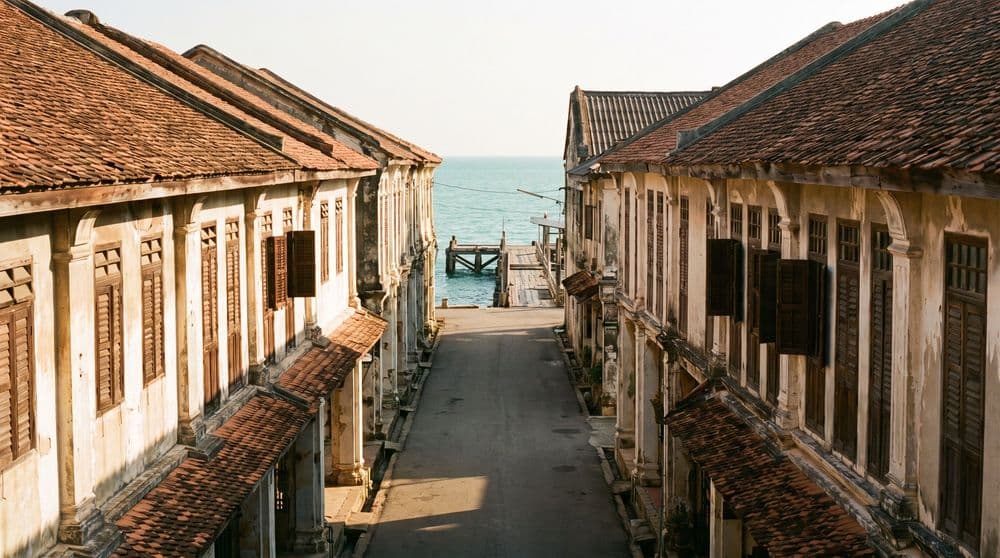
Nathon, Koh Samui is the one place on this island where nobody's trying to sell you a boat trip. No beach clubs, no fire shows, no guy with a laminated menu of tours. It's the west-coast town where Samui actually runs itself from: the ferry pier, the government offices, the hospital, the old Chinese-Thai shophouses that were doing business here long before anyone flew in for a pool villa. Whether it's worth the trip depends entirely on what you're after, so let's be honest about it.
What Nathon actually is
Before Samui had an airport, Nathon *was* the island. It was the trading centre, the port, the place Chinese merchants settled in through the 19th and 20th centuries and built the two-storey shophouses that still line the old town: wooden shutters, tiled roofs, the whole Sino-Thai look you'd otherwise fly to Georgetown or Phuket Old Town for. Once tourism and the airport pulled the money east to Chaweng and Bophut, Nathon kept the paperwork instead. It's still where the government offices, the police station, the courthouse, and the island's main hospital sit. That's not a knock. It just means the place feels lived-in rather than staged, which after enough beach clubs starts to feel like a relief.
The layout is simple: a main road running one block back from the water, with quieter side streets peeling off it. Pavements are properly uneven, so wear shoes you can trust, and go in the morning or the evening rather than midday, when the heat sits on that stretch of coast with nothing to break it up.
The Saturday walking street
If you're going to bother with Nathon at all, go on a Saturday evening, and go for the walking street. From around 5pm to 11pm, the seafront's middle street closes to traffic and turns into a proper night market: stallholders selling everything from street food to knick-knacks, set up along the water. It's a genuinely different crowd from what you'll see on our own side of the island. This is mostly locals, with a steady trickle of budget backpackers who've made the ferry-town circuit, not the tour-bus crowd that shows up for Fisherman's Village. If you've been enjoying our night markets guide, this is the one on it that actually feels local rather than built for you.
Food and shopping, the unglamorous way
Nathon doesn't do fine dining, and that's the point. Mumthong, opposite the government offices, is the kind of low-cost, no-fuss Thai kitchen locals actually eat at, not a place built for a review. Along the waterfront you'll find crispy pork over rice, whole grilled squid, seafood platters, spicy papaya salad, and noodle soups, plus the usual waterfront spread of Thai food, pizza, and coffee near the ferry terminal for people killing time before a boat. It's a different register entirely from the beach-strip dining we usually send people to on the east side, but it belongs to the same instinct: eat where the sign isn't in three languages.
Shopping is small and specific rather than mall-shaped: a handful of independent shops selling coconut oil and aromatherapy products, Thai fruit wines and organic goods, and one furniture and home décor place that will actually ship internationally if you fall for something. There's also the Nathon Fresh Market for produce, which is worth a wander even if you're not buying, and a general grocery scene selling textiles, dried seafood, and herbal medicine that has nothing to do with souvenirs. If you want an actual retail hit, our shopping guide covers the mall side of the island. Nathon is the opposite of that.
The ferry pier you've probably already used
If you arrived by boat instead of by plane, there's a decent chance you already passed through Nathon Pier without stopping. It's the island's main ferry gateway: Seatran Ferry and Raja Ferry run to Donsak on the mainland, and Lomprayah and others connect on to Koh Phangan (45 minutes to an hour) and Koh Tao (an hour and a half to two hours). We go into the full picture of getting here and around in how to get to Koh Samui and getting around Koh Samui, but the short version: if you're ferry-hopping the islands, you'll be back here whether you plan a detour or not.
Is it actually worth the trip?
Honestly, only if you time it right. Nathon on a random Tuesday afternoon is an uneven pavement, a hot walk, and not much reason to have come. Nathon on a Saturday night, with the walking street running and the heat off the day, is a genuinely different Koh Samui to the one you're staying in, and worth the best part of half an hour's drive from our side of the island to see it. It's also the west coast, which means it's the side that actually gets a proper sea sunset, unlike our own sunrise-facing bay in Chaweng Noi covered in Koh Samui's real sunrise, or its west-coast sibling Lipa Noi Beach. Pair the two and you've made a real evening of it. Go for a curious hour on any other day and you might wonder what the fuss was.
Quick answers about Nathon, Koh Samui
Is Nathon worth visiting?
On a Saturday evening, yes. It's the one part of the island that isn't performing for tourists, and the walking street is the payoff. Any other time, it's a genuine but low-key old town, better as a stop on the way to or from the ferry than a destination on its own.
What is there to do in Nathon Town?
Walk the old Sino-Thai shophouse streets, eat at a proper local kitchen like Mumthong or along the waterfront stalls, browse the small independent shops and the Nathon Fresh Market, and if it's a Saturday, catch the walking street from around 5pm to 11pm.
What day is the Nathon walking street?
Saturday evening, roughly 5pm to 11pm, on the seafront's middle street.
How far is Nathon from Chaweng?
Reckon on the best part of half an hour by road from our side of the island. It's a genuine drive, not a quick pop-over, so it works best folded into a ferry pickup or a deliberate Saturday-night trip rather than a spontaneous afternoon detour.
The Villa
Come stay above the bay.
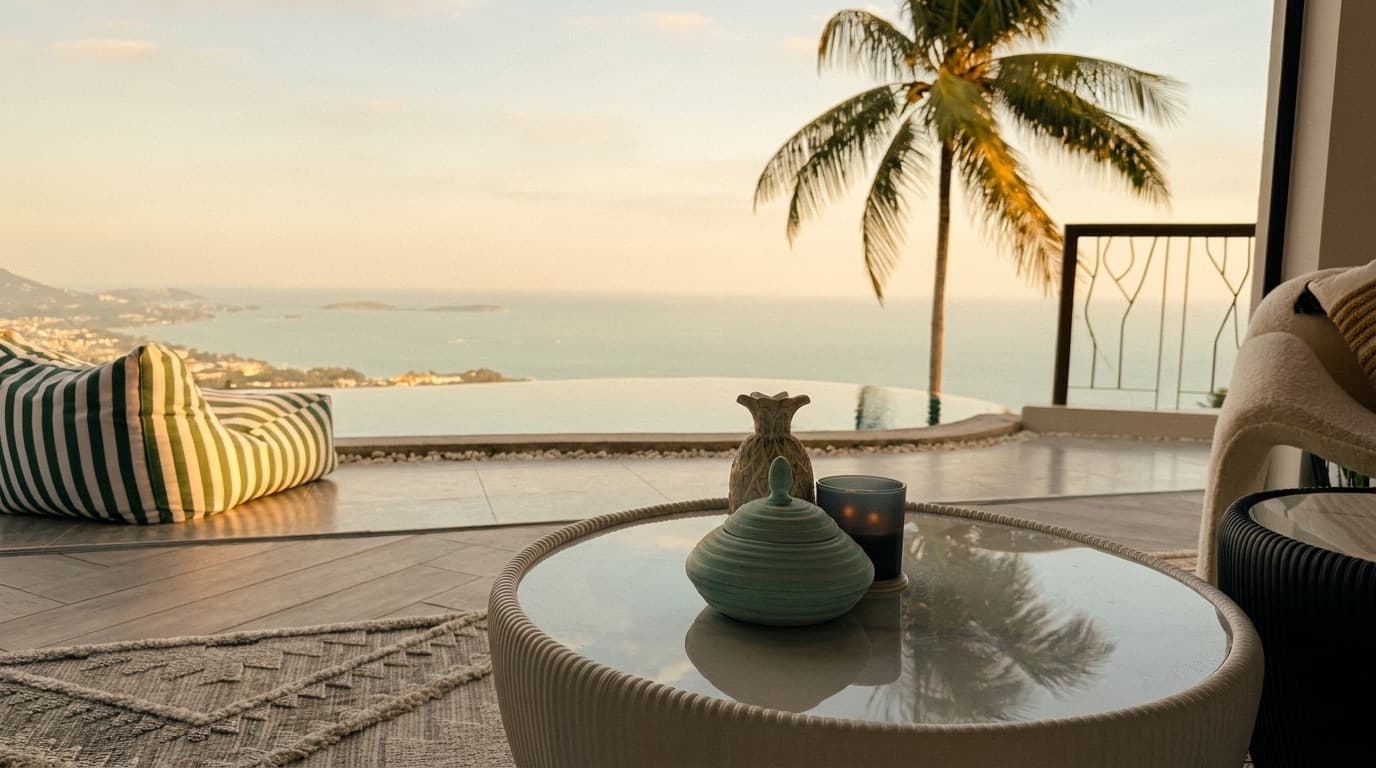
Sabai Sabai is a three-bedroom villa on the cliffs above Chaweng Noi, with an infinity pool and the whole Gulf of Thailand below.
See the villa →Written by
May
Living in the sunshine