Koh Samui West Coast vs East: Which Side of the Island Should You Stay On?
The west coast of Koh Samui, the east, the north and the south, from people who live on one of them. What the water actually does on each side, and which one suits you.
May · August 31, 2026
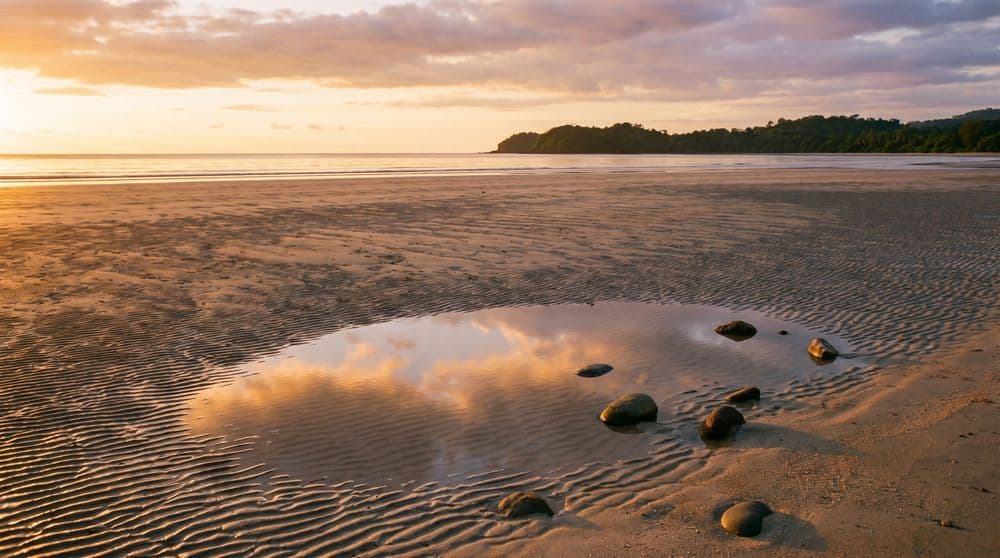
The west coast of Koh Samui is the side nobody sells you. Outrigger's island beach guide runs to eight beaches and every one of them sits on the east or the north coast. The west gets nothing. The south gets nothing.
Samui is a lump of rock in the Gulf of Thailand with four sides, and they do not behave the same way. Different water, different light, different weather in November, different amount of anything to do after eight at night. We live on the east coast and drive the ring road most weeks. Here is what each side is actually like.
The east coast: the sand everyone came for
This is the postcard side and the busy side. Chaweng runs about seven kilometres down it and is the island's longest and busiest beach. Lamai sits south of it doing a slightly cheaper version of the same thing.
The water here is open. Samui Holiday Villas, who have been placing guests on this island for twenty years, describe Chaweng as open water with some surf and Lamai as open water with livelier surf. That is the honest read. It is swimmable most of the year and it is not a lake.
The east faces the Gulf, so the sun comes up out of the sea in front of you and goes down behind the mountain at your back. Hotels on this coast still promise sunsets. We wrote a guide to the sunrise instead.
The catch is the weather. Samui's wet season runs roughly October to December with November the peak, and it is driven by the northeast monsoon, a wind pattern that pushes weather across the Gulf and onto the island's east coast. This is the side that gets it first. The flooded-Chaweng photos people panic about every year come from here.
Stay east if you want restaurants, shops, a crowd, and the option of doing something at night.
The west coast: sunset, flat water, and very little going on
Now the side the guides skip. Koh Samui's west coast looks out at Ang Thong and the group everyone here calls the Five Islands, and it gets the sunset.
Lipa Noi is the headline. The Headland, a villa outfit on this coast, describes it as fine white sand with very little rock or coral in the water, shallow for up to 100 metres out. Samui Holiday Villas call it wide, flat and virtually rock-free with a gentle slope. If you have a four-year-old, this is the best water on the island and it is not close.
Taling Ngam, ten minutes south, is the other one. Sunsets over the Five Islands, up to ten beachside restaurants on the sand, and enough jungle behind it that it still feels like the far end of somewhere.
Here is the trade nobody prints in the brochure. On this coast, in the dry months, the afternoon tide goes out a long way. Samui Holiday Villas are straight about it: the north and east coasts are less affected, and on the west the retreat opens up sandbars and rock pools that children love while proper swimmers wait for higher water. Turn up at three in February expecting a swim and you may be walking instead.
The west's other quiet advantage is November. Ang Thong sits west of Samui and is considerably more sheltered from the northeast monsoon than the east-coast dive sites, which is why boats still run there on days the eastern trips get cancelled. The coast underneath that shelter behaves the same way. It does not stop the rain. It calms the sea.
What the west does not have is an evening. Nathon is the island's working town and ferry port, not a night out. The rest is residential, and the crowd it draws skews older.
The north coast: calm water and Koh Phangan on the horizon
The north is the compromise, and it is a good one.
Bophut curves for three kilometres with anchored sailboats out front and mountainous Koh Phangan behind them. Fisherman's Village sits on it, so you can swim in the afternoon and walk to dinner. The water is calm and deepens gently.
Maenam is the one to be careful about, because the sources disagree and both are right on different days. Samui Holiday Villas rate it calm and quicker to get deep, which real swimmers prefer to the toddler bays. Outrigger points out that windsurfers favour it because the currents and winds pick up on the north side, so the water is not always as calm or as clear as elsewhere. Treat Maenam as the windy one and it will not disappoint you.
Bang Por, west along the same coast, is almost six kilometres of quiet, clean, uncrowded sand with a small reef offshore and none of the speedboat and jet ski noise that ruins other beaches. Islanders drive out here for seafood at local prices with Koh Phangan on the horizon. Travelfish notes this stretch is where the long-termers, expats and retirees end up, which tells you plenty.
One north-coast footnote: Bang Rak sits under two kilometres from the airport. Useful for a last night. You will hear the planes.
The south coast: the one that barely exists
The south is empty, and that is the entire product. Samui Holiday Villas describe Laem Sor and the south coast as calm, very quiet and barely developed, long beaches with fishing boats and almost nothing built on them, which is where several of the island's large private estates have quietly gone.
Thong Krut is a working fishing village down here with a pier the longtails leave from for the islands offshore. Hua Thanon is a Muslim fishing town with painted boats and the morning catch sold off the sand.
Choose the south when the villa is the holiday and the beach is the entertainment. Do not choose it if anyone in your group needs a bar.
So which side should you stay on
East if you want the island to entertain you, and you are not travelling in November. West if you have small children, love a sunset, and genuinely do not want an evening out. North if you want most of both and the better view. South if you want none of it.
We live on the east coast, seven minutes south of Chaweng over the headland, which is our own answer to the question: the busy coast, at the quiet end of it. That trade is laid out in Chaweng vs Chaweng Noi, and if you want the town-by-town version rather than the coast-by-coast one, start with our guide to the areas of Koh Samui.
Quick answers
Which side of Koh Samui is best to stay on?
East for restaurants, nightlife and the biggest beaches. North for calm water and the Koh Phangan view with dinner in walking distance. West for sunsets and the shallowest water for young children. South for silence. There is no best side, only which of those four sentences describes you.
Which coast of Koh Samui has the best sunsets?
The west. Lipa Noi and Taling Ngam look straight out at the Five Islands and the sun goes down into the water in front of you. Bang Por on the north-west corner gets a version of the same thing. The east coast gets the sunrise instead, which is better and emptier.
Is the west coast of Koh Samui good for swimming?
For children it is the best water on the island: shallow, soft, almost no rock. For adults who want to swim properly, check the tide, because in the dry months the afternoon water pulls back a long way over there.
Which side of Koh Samui has nicer beaches, north or south?
North, if you want to use them. The north coast has Bophut, Maenam and Bang Por, all with facilities and food. The south has emptier, wilder sand and almost nowhere to eat, so it wins on scenery and loses on everything else.
Which coast is best in the rainy season?
West and south. The northeast monsoon drives weather across the Gulf onto the east coast, and the western side of the island sits sheltered from it. Rain still falls everywhere. The sea is calmer over there.
The Villa
Come stay above the bay.
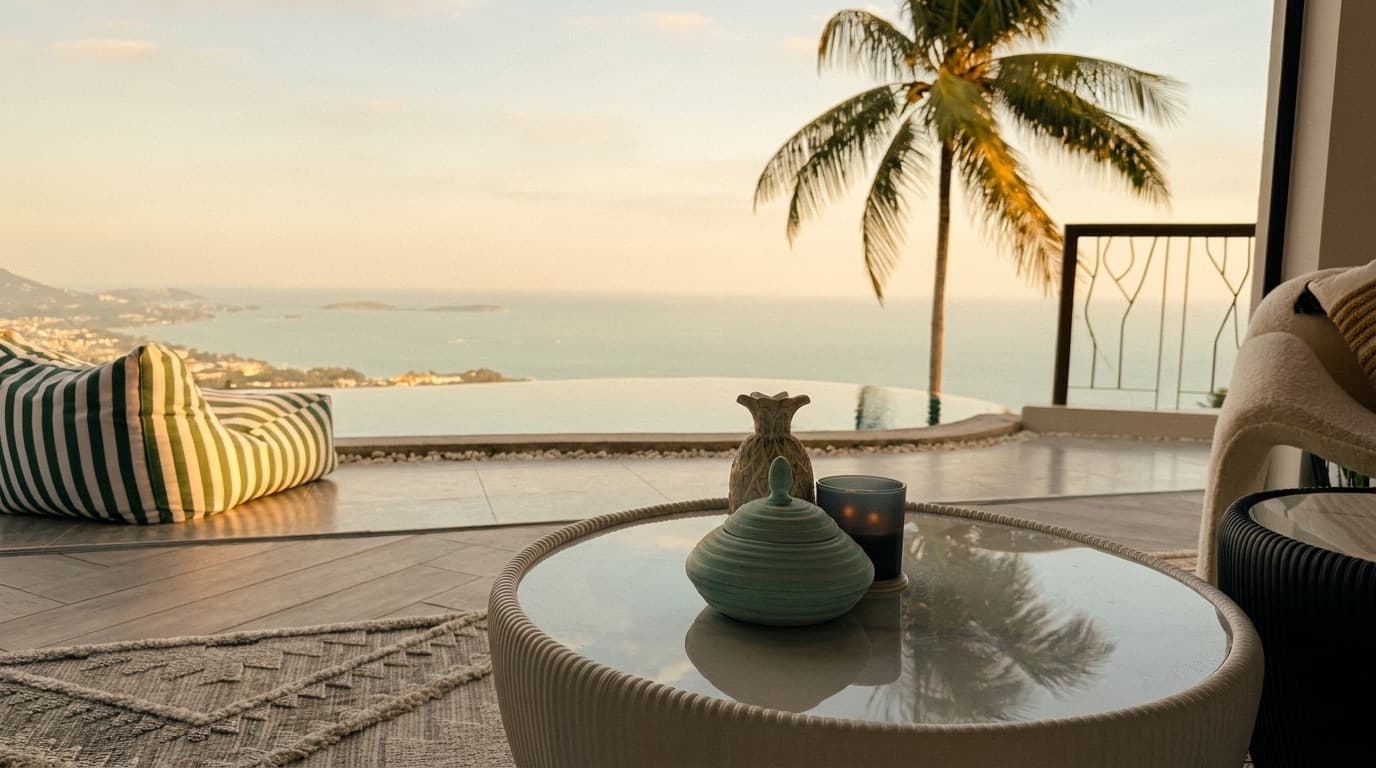
Sabai Sabai is a three-bedroom villa on the cliffs above Chaweng Noi, with an infinity pool and the whole Gulf of Thailand below.
See the villa →Written by
May
Living in the sunshine