Guan Yu Shrine, Koh Samui: The Statue Everyone Photographs
The honest guide to the Guan Yu Shrine, Koh Samui: the 16-metre bronze statue near Hua Thanon, who Guan Yu actually was, and why the removal rumour isn't about this one.
May · September 26, 2026
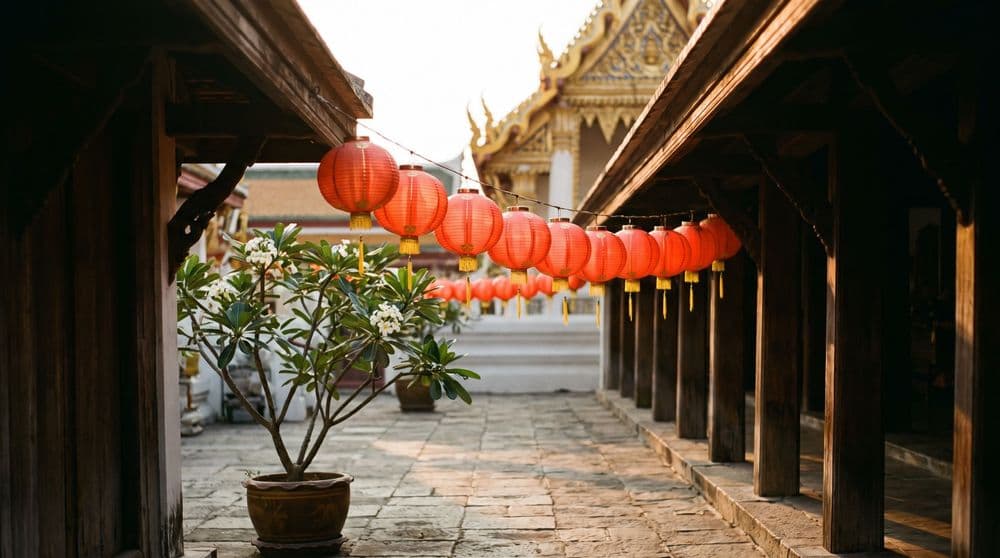
The Guan Yu Shrine, Koh Samui's biggest bronze statue, gets driven past by more people than actually stop for it. It sits on the coast road near Hua Thanon, on the quieter southeast stretch, and most of the traffic passing it is headed to Big Buddha up north, which is smaller, more famous, and, by visitors' own comparisons, considerably more crowded. We live in Chaweng Noi and we'd argue this one's worth the five-minute stop the road already puts you next to.
Who's the guy on the plinth
Guan Yu wasn't invented for tourism. He was a real general during China's Three Kingdoms period, roughly the third century, celebrated for a loyalty and moral integrity that became legendary well beyond his own lifetime. That's why he got deified after death rather than forgotten, and why Chinese communities across Southeast Asia still keep a statue or a shrine to him. He's worshipped today as a god of war and, for a shopkeeper, a god of wealth and protection, which is the folk-belief version of why business owners in Chinese communities traditionally keep a small figure of him near the till.
Koh Samui's version isn't a shop-counter figure. Multiple sources describe the bronze statue here as the largest of him in Thailand, standing around 16 metres tall, which puts it a good four metres above Big Buddha's 12-metre figure up north, the island's other headline statue.
What's actually on site
It's more than the one statue. Around the base sits traditional Chinese-style architecture with red lanterns strung overhead, plus smaller altars to other deities tucked around the courtyard, so it functions as a working shrine rather than a single roadside photo op. There's parking, and food and drink options nearby if you time it around a meal. Entry is free.
Hours get reported slightly differently depending on the source, mostly daytime with a late-afternoon close, so treat it as a daylight stop and don't plan a visit around an exact closing minute.
Where it actually is
The shrine sits in the Ban Hua Thanon area of Maret, on Samui's southeast coast, a few minutes past Lamai on the road heading south. That puts it on the same stretch as Hua Thanon's fishing village and the hill-top Red Temple, which is worth knowing because those two are usually paired on the same drive already. This one's a third stop on a road you're probably already on, not a special trip.
Worth sitting with for a second: on the same short stretch of coast you get a Chinese-Thai shrine to a third-century general, a red Buddhist temple with a shrine to a Chinese goddess of mercy tucked inside it, and a working Muslim fishing village. Three different faiths, one road, and nobody's written a tour that mentions all three. Now we have.
Is it worth stopping for
If you've already built a morning around Hua Thanon and the Red Temple, yes, easily, it's on the way and it costs you nothing but the five minutes to pull over. If you're weighing it against Big Buddha as a standalone trip, Big Buddha still wins on fame, but this one wins on actually having the place to yourself, and its statue is the taller of the two. Fewer coach parties, fewer selfie queues, a bigger bronze.
Quick answers
Why was the Guan Yu statue removed?
Not this one. That question is about a completely different Guan Yu statue, a 58-metre bronze in Jingzhou, China, that Beijing ordered dismantled and relocated after officials called it wasteful and locals complained it broke local height rules. Different statue, different country, different reason. Koh Samui's Guan Yu Shrine is intact and open daily.
Why is Guan Yu so famous?
He was a real general in China's Three Kingdoms era, celebrated for a loyalty and moral integrity that turned into legend, and that reputation is exactly what got him deified after death. Centuries later he's worshipped across Chinese communities in Asia as a god of war, wealth, and protection, which is why his statues and shrines turn up as far from China as a Thai island's coast road.
Is it good luck to have a Guan Yu statue?
In Chinese folk belief, yes. He's associated with protection, prosperity, and loyalty, which is why business owners in particular keep a figure of him near the till. The Samui shrine is the tourist-scale version of the same idea.
Is there an entry fee for the Guan Yu Shrine?
No. It's free to visit, same as the working temples elsewhere on the island, though a small donation is always welcome at a religious site.
Where is the Guan Yu Shrine on Koh Samui?
On the southeast coast road in the Hua Thanon area of Maret, a few minutes south of Lamai, on the same stretch as Hua Thanon Beach and the Red Temple. If you're staying with us in Chaweng Noi, it's a straightforward add-on to a south-coast morning rather than a trip on its own, and it fits neatly into the wider run of Koh Samui's temples if you're doing the culture half of the island in two outings instead of one.
The Villa
Come stay above the bay.
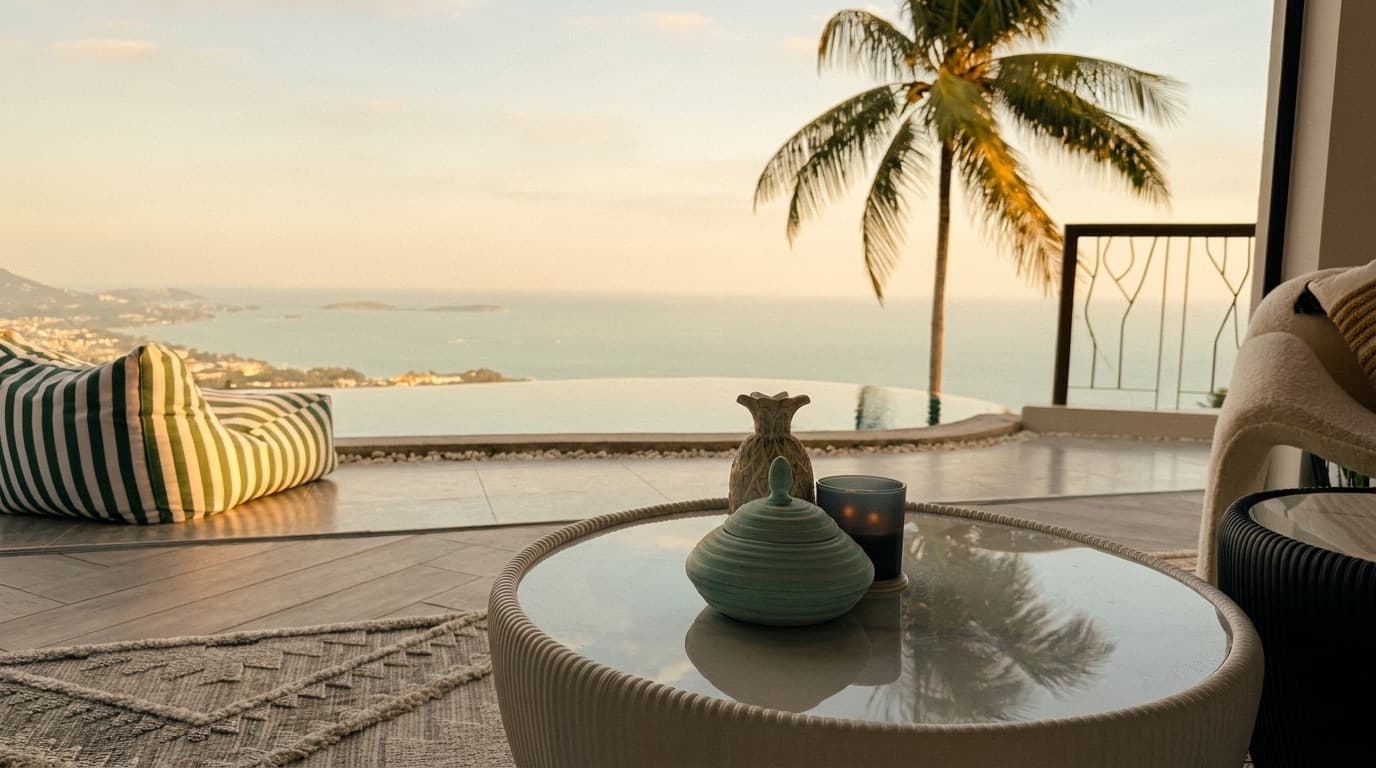
Sabai Sabai is a three-bedroom villa on the cliffs above Chaweng Noi, with an infinity pool and the whole Gulf of Thailand below.
See the villa →Written by
May
Living in the sunshine