Can You Drink Tap Water in Koh Samui? Plus the Ice and the Street Food
Can you drink tap water in Koh Samui? No. What the official travel-health advice says about the tap, the ice, brushing your teeth and street food.
May · November 27, 2026
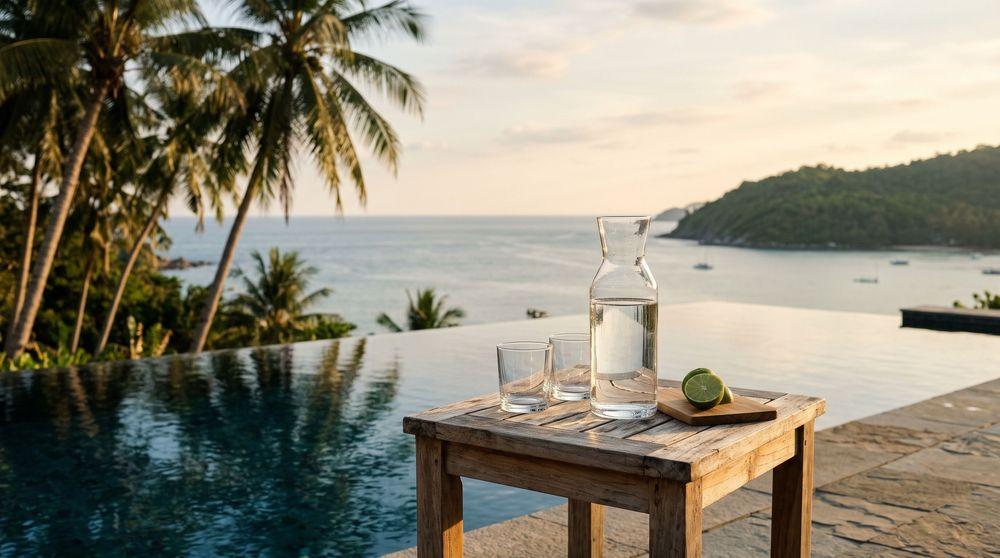
Can you drink tap water in Koh Samui? No. Not us, not the neighbours, not the hotel down the hill. You shower in it, you wash up in it, and you drink something else.
We live in Chaweng Noi and run a villa here, so this is a kitchen question for us, not a trivia question. Below is what the tap is good for, what the travel-health people say about ice and street food, and where local habit is a bit more relaxed than the leaflet. We'll tell you which is which. We're villa people, not doctors.
Can you drink tap water in Koh Samui?
No, and the locals don't either.
The island's mains water is treated by the Provincial Waterworks Authority. The plant isn't the problem. One Samui villa agency's July 2026 guide blames the trip to your glass: old pipes, and the storage tank that sits at almost every property and needs regular cleaning to stay hygienic. A company that sells water machines published its own Samui guide in October 2026. It has a product to push, but it lands in the same place: fine for washing and bathing, not recommended for drinking.
So the local system is simple. Tap for the shower, the dishes and the pasta pot. Bottled or filtered for anything you swallow.
The official advice agrees. The UK's national travel-health network, NaTHNaC, says that where sanitation is poor you shouldn't drink tap water unless it has been treated. The US CDC says not to drink it anywhere it might be contaminated. Boiling counts as treating it: NaTHNaC says a rolling boil disinfects water, so the kettle is your friend and so is a pan of soup.
Brushing your teeth, and washing your face
This is where the leaflet and the island part ways a little.
The leaflet first. NaTHNaC says not to brush your teeth with untreated tap water in places with poor sanitation. The CDC says to use bottled or disinfected water, and to avoid swallowing water in the shower.
Now the island. Travelfish's Samui health page says tap water is fine for brushing teeth. The villa agency's guide says most households here use bottled or filtered for it anyway.
Our take: a bottle by the sink costs about 14 baht and ends the debate. If you have a sensitive stomach, small children or a short holiday you'd like to spend upright, follow the leaflet.
Washing your face and showering are fine according to both Samui guides. Just don't drink the shower.
Is the ice safe in Koh Samui?
Here the official advice is blunt, and you should hear it before you hear ours. Both NaTHNaC and the CDC say to avoid ice where the water is doubtful, because it was probably made from the tap.
What happens on Samui is this. The ice in your drink is nearly always a little cylinder with a hole through the middle. The villa agency's guide describes it as industrially produced and treats it as safe. A Thai food site's September 2026 guide says the same: factory-made from filtered water, delivered in sealed bags. Travelfish says most restaurants and bars have their ice delivered, made from purified water.
That is local practice. It isn't a medical all-clear, and we won't pretend otherwise. People on the Thailand travel forums draw one more line, between the ice made for drinks and the big blocks used to keep things cold. Drink the first kind. The second kind is busy with the fish.
If your doctor has told you to be careful, skip the ice and order the bottle.
Is street food safe in Koh Samui?
The CDC's first answer is "avoid eating food from street vendors". Its second answer, for people who are going to anyway, is to eat it cooked and steaming hot and skip the raw vegetables. NaTHNaC says the same with better manners: street food is for avoiding unless it is thoroughly cooked in front of you and served hot on clean crockery.
That is also a description of a good stall. A wok over a flame, your order made while you stand there, straight onto the plate. The stir-fries and the charcoal-grilled chicken in our Koh Samui street food guide pass that test. The som tam is a raw salad, so by the leaflet it doesn't.
What NaTHNaC tells you to leave alone is more useful than the word "street". Salads. Uncooked fruit and vegetables. Food left sitting uncovered in the warm, with the buffet named as the example. Raw or undercooked meat, fish and shellfish, oysters included. Notice that a buffet is on that list and a hot wok isn't.
The Thai food site adds the rule locals actually use: pick the busy stall. A queue means the food hasn't had time to sit. At the night markets, that means eating at six with everyone else, not at half nine with the leftovers.
Fruit you peel yourself is on the official good list. Bananas, mangoes, anything with a jacket. The CDC says to stay away from fruit that somebody else cut up.
Stocking a villa kitchen
A kitchen changes the question from "is it safe" to "which water for what".
Drinking, ice trays, rinsing fruit you'll eat raw: bottled. The CDC says raw fruit and vegetables are safer peeled by you or washed in bottled or disinfected water.
Tea, coffee, rice, pasta, soup: tap is fine, because you're boiling it.
Water is cheap enough to stop thinking about. The villa agency's guide puts a 1.5-litre bottle at about 14 baht in 7-Eleven and a 6-litre jug at 40 to 60 baht. It also describes refill kiosks on residential streets and outside the bigger supermarkets, at 1 to 2 baht a litre if you bring your own jug. Do the big water run with the rest of the shop. Our Koh Samui supermarkets guide covers where. Check the seal on every bottle. Both health services say so.
Babies are their own subject. NaTHNaC says bottled water for formula should be boiled as well, and should have less than 200mg of sodium a litre. Read their factsheet before you fly, not ours.
If your stomach loses anyway
It might. NaTHNaC counts most of Asia as high-risk for travellers' diarrhoea and says more than 20 percent of visitors from richer countries get it. It usually arrives in the first week and is over in three or four days.
Their advice is to keep drinking and keep eating, and to use oral rehydration salts if it's rough. The Thai food site says every 7-Eleven sells electrolyte sachets for about 10 baht.
See a doctor if it hasn't improved in three days. Go straight away for a fever of 38°C or more, blood or mucus, or severe stomach pain. Small children and older travellers shouldn't wait at all if they can't keep fluids down. Samui has two international-standard hospitals with 24-hour emergency departments, which we covered in is Koh Samui safe.
Before the trip, ask a travel clinic about vaccines. The CDC recommends hepatitis A for unvaccinated travellers to Thailand and typhoid for most. Both travel in food and water.
Then come anyway. Buy the big jug, boil the kettle, eat where the queue is, and have the mango you peeled yourself by the pool. For the fruit, our morning markets guide has the where and when.
Quick answers
Can you drink tap water in Koh Samui?
No. The mains water is treated at the plant, but old pipes and property storage tanks are why locals and hotels drink bottled or filtered water.
Can I brush my teeth with tap water in Thailand?
UK and US travel-health advice says to use bottled or treated water where the tap is doubtful. One Samui guide calls tap fine for teeth. Bottled is the cautious choice and costs about 14 baht.
Can I wash my face with tap water in Thailand?
Yes. Washing and showering in tap water is fine. Just don't swallow it.
Can foreigners drink tap water in Thailand?
It isn't about being foreign. Thai households don't drink it straight from the tap either.
Is ice safe in Koh Samui?
Official advice is to avoid ice where the water is doubtful. Locally, the tube ice with a hole served in drinks is factory-made from filtered water and widely treated as safe. If you need to be careful, skip it.
How do you not get sick from Thailand street food?
Eat food cooked in front of you and served steaming hot. Pick busy stalls. Official advice is to skip salads, pre-cut fruit, raw shellfish and anything that has been sitting out.
The Villa
Come stay above the bay.
Sabai Sabai is a three-bedroom villa on the cliffs above Chaweng Noi, with an infinity pool and the whole Gulf of Thailand below.
See the villa →Written by
May
Living in the sunshine